

Published 2026-06-04
Keywords
- Arab-Islamic Heritage,
- Translation Movement,
- Transmission and Borrowing,
- Authorship and Creativity,
- Arab-Islamic Civilization
- Geography,
- Travel Literature,
- Islamic Philosophy,
- Greek Heritage,
- Persian and Indian Influences,
- Knowledge Transfer,
- Arab Sciences ...More
Abstract
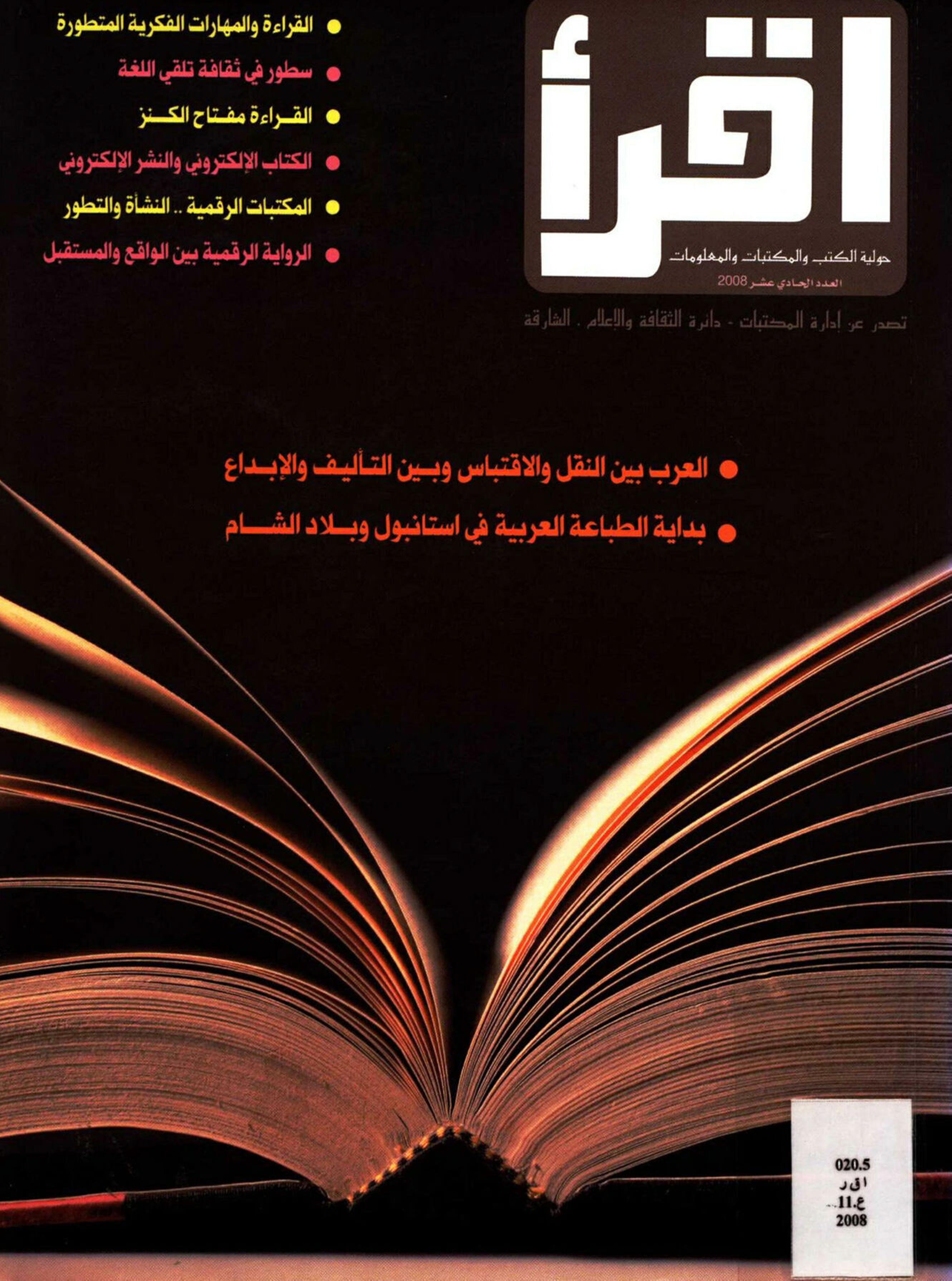
The article addresses the question of whether the Arabs should be viewed merely as transmitters and borrowers of knowledge, or also as authors and creators. It situates this issue within the historical expansion of Arab contact with Persian, Greek, Indian, and other cultures, showing that translation was not a purely mechanical act but a process of assimilation, reinterpretation, and addition. The article draws on several fields, including geography and travel literature, where Arab and Muslim geographers and travelers contributed to the description of lands, routes, maps, and spatial knowledge. It also discusses the translation movement during the Umayyad and Abbasid periods and its role in introducing medicine, chemistry, astronomy, philosophy, and other sciences. The article further examines the influence of Greek philosophy on Islamic thought, emphasizing that Muslim philosophers were not simple imitators but engaged in commentary, critique, reconciliation, and intellectual development. It concludes that Arab-Islamic civilization was built through creative interaction with the heritage of other nations, and that transmission and borrowing were stages in the production of new knowledge inseparable from authorship and creativity.